Jon Jones, Francis Ngannou, And The UFC’S Heavyweight Problem

Updated: May 27
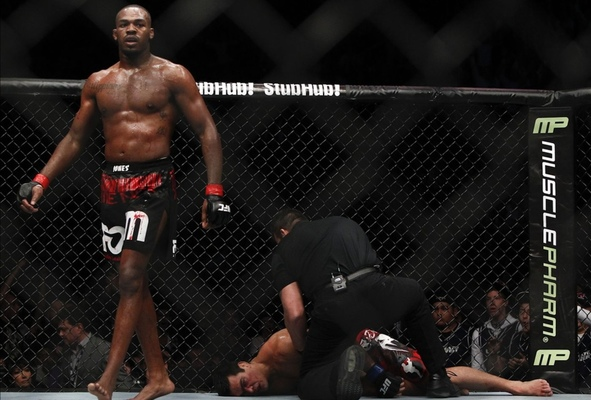
On the surface, this problem is simple. Jones wants the Francis Ngannou fight. Francis wants the fight. MVP’s Nakisa Bidarian says he is willing to co-promote with the UFC to make it happen. The audience still wants it. The story has been sitting there for years.
But MMA is rarely that simple.
Because Jon Jones is not just a fighter under contract.
He is one of the greatest fighters in UFC history and one of the biggest draws the UFC has ever had.
He is also older, physically damaged, dealing with severe hip arthritis, and no longer in the part of his career where he needs to fight just to prove he belongs.
Jones has openly discussed arthritis serious enough to qualify him for a hip replacement, while still saying the right kind of moment could pull him back in.
That is what makes this so complicated.
This is not Jon Jones begging for another UFC booking.
This is Jon Jones asking whether the UFC will let him chase the one fight they could not deliver.
And that answer is probably no.
The Fight Everyone Knows Is Still There
Jones vs. Ngannou has always been the ghost fight of modern heavyweight MMA.
It is the fight that should have happened when Francis was UFC heavyweight champion and Jones was preparing to move up. It is the fight fans argued about for years. It is the fight that would have answered the biggest heavyweight question of this era.
Then Francis left.
Jones beat Ciryl Gane.
The UFC moved on.
Francis went into boxing, then MVP, then back into MMA under a different entertainment machine. Jones became champion, beat Stipe Miocic, retired, vacated, flirted with coming back, and now sits in the strangest possible position: still under UFC contract, still famous enough to headline anything, but not active enough for the UFC to build around him.
That is where the leverage battle begins.
Jones recently said getting out of his UFC contract is “very, very possible,” while also acknowledging the obvious problem: Dana White likely has no interest in helping make a Francis Ngannou fight happen outside the UFC system.
And why would he?
From Dana’s perspective, co-promoting Jones vs. Ngannou does three things the UFC historically hates.
It validates Francis after he left.
It gives MVP and Netflix a UFC-level asset.
And it tells every future champion that there may be life outside the UFC contract.
That is the real issue.
Not the fight.
The precedent.
Nakisa Is Willing. That Does Not Mean Dana Is.
Nakisa Bidarian being willing to co-promote is important because it shows MVP understands the size of the moment.
MVP is not pretending it can build the UFC overnight. It is trying to build events. Names. Moments. Spectacle.
That matches exactly where the sport is going.
The uploaded source repeatedly frames modern MMA as something bigger than martial arts alone: entertainment, attention, narrative, leverage, and cultural relevance all layered on top of the fight itself.
Jones vs. Ngannou is not a rankings fight anymore.
It is an attention fight.
It is the biggest heavyweight “what if” of the last decade.
It is also exactly the kind of fight Netflix and MVP would want: one night, massive names, global curiosity, no need for a full divisional ecosystem.
That is why Nakisa saying he would co-promote makes sense. He should say that. It puts the ball in Dana’s court while making MVP look fighter-friendly and flexible. Recent reports have Bidarian saying MVP would welcome working with the UFC, while also admitting the fight is unlikely as long as the UFC controls Jones’ contract.
But Dana White has already shown how he feels about co-promotion.
When the idea of UFC working with PFL for Jones vs. Ngannou came up after Francis boxed Tyson Fury, Dana basically dismissed the concept.
That matters.
Because Dana does not usually lose these public leverage fights by meeting the fighter halfway.
He waits.
He pivots.
He reframes.
Then he makes the UFC product the main story again.
Dana’s History Tells You the Likely Outcome
The Francis Ngannou situation is the clearest comparison.
Francis left the UFC as heavyweight champion after a contract dispute. He said the issue was not just money, but freedom, contract structure, sponsorships, and broader fighter protections like health insurance.
The UFC did not chase him forever.
They stripped the situation down, moved forward, and booked Jones vs. Gane for the vacant belt.
That is the UFC model.
Nobody is bigger than the machine.
Even when they are.
The same logic applied to Jones and Tom Aspinall. For months, the heavyweight division was stuck because Jones was attached to legacy fights while Aspinall was the obvious sporting answer.
Dana spent a long time insisting the unification fight would happen, but eventually the UFC had to move on. ESPN reported in June 2025 that Jones retired and Tom Aspinall was named champion.
That is the pattern.
The UFC will tolerate star complications for a while.
But once the star becomes more disruptive than useful, the company turns the page.
With Jones, that turn is already happening.
The Arthritis Also Changes the Negotiation
The arthritis part is not just a health note.
It changes the whole business equation.
If Jones were 30, healthy, and still clearly chasing legacy, the UFC might have more reason to sit at the table.
But Jones is not that version anymore. He is 38, already retired once, publicly dealing with a serious hip issue, and openly saying he does not really need to fight anymore.
That weakens both sides in different ways.
It weakens Jones because the UFC can say: why should we restructure the heavyweight universe around a fighter who might only fight once?
But it also weakens the UFC because Jones knows the same thing.
He does not need five more fights.
He does not need to climb rankings.
He does not need a title shot.
He needs one special moment.
That was the White House card.
Now it is Francis.
And if neither happens, he can probably live with retirement.
That is why this dispute feels less like a normal contract fight and more like a waiting game.
Jones wants freedom.
The UFC wants control.
Francis wants the fight.
MVP wants the moment.
Dana wants none of that unless the UFC owns the upside.
Tom Aspinall Is the Sporting Answer
The problem for Jones is that the sport has already moved on.
Tom Aspinall is the answer if this is about merit.
He is the champion. He is the modern heavyweight. He is fast, dangerous, young enough to represent the future, and he already spent too much of his prime waiting on Jones. Reports now have Aspinall sidelined by a serious eye injury from the Ciryl Gane no-contest, with doctors advising more time before contact training.
That buys the UFC time.
But it also makes the division messy again.
If Aspinall were healthy, the path would be clean: defend the undisputed belt against the next legitimate contender and bury the Jones drama completely.
Instead, the UFC has to keep the heavyweight story alive while its real champion heals.
That is where Alex Pereira comes in.
Alex Pereira Is the UFC’s Cleaner Superfight
If Jones vs. Ngannou is the fight the UFC does not want to help create, Alex Pereira at heavyweight is the kind of spectacle the UFC does want.
Pereira is controllable in the UFC ecosystem.
He is active.
He is beloved.
He is already a two-division champion.
And now he is attached to heavyweight possibilities while Aspinall recovers. Reports have Ciryl Gane facing Pereira for an interim heavyweight title at the White House card, with Aspinall expected to face the winner when healthy.
That is a very UFC solution.
It keeps the title picture moving.
It gives Dana a massive star.
It gives the White House card a historic hook.
And it does not require giving Francis Ngannou, Jake Paul, Nakisa Bidarian, or Netflix anything.
That is the key.
Pereira gives the UFC spectacle without surrendering control.
Ngannou gives spectacle to everybody else.
That difference is everything.
Gable Steveson Is the Long Game
Then there is Gable Steveson.
Gable is not the answer to Jones right now.
He is the answer to the question the UFC is already asking next.
What does heavyweight look like after Jones, after Stipe, after Francis, after the old guard?
That is why Steveson matters. Olympic gold medalist. Elite wrestling base. Freak athlete. Marketable American heavyweight. Even before proving himself in MMA, he already has people talking about his ceiling.
Tyron Woodley recently claimed Steveson would give Aspinall serious problems, which may be premature, but it shows the kind of hype machine already forming around him.
The UFC does not need Gable to be champion tomorrow.
They need him to become part of the next heavyweight story.
Aspinall is the present.
Pereira is the spectacle.
Gable is the investment.
Jones is the ghost.
Francis is the forbidden fight.
That is the board.
The Likely Outcome
The most likely outcome is not Jones vs. Ngannou.
It is not UFC-MVP co-promotion.
It is not Dana White suddenly deciding that helping Netflix create the biggest heavyweight fight in the world is good business.
The most likely outcome is stalemate.
Jones remains under UFC contract unless the UFC sees a benefit in releasing him. The UFC has no obvious reason to do that while MVP is trying to build itself as an alternative MMA power.
Dana has already shown with Francis that he would rather move forward without a star than let that star dictate the structure.
He has also shown with Jones that patience has limits.
So the realistic path looks like this:
Jones keeps publicly pushing the Francis fight.
MVP keeps saying it is willing to co-promote.
Francis keeps saying he is open.
Dana keeps the door mostly closed.
The UFC builds heavyweight around Aspinall, Pereira, Gane, and eventually Steveson.
And Jones either stays retired, boxes later, or returns only if the UFC offers him something that feels historically big enough to justify the pain.
That is probably where this ends.
Not with a cage door closing.
With a contract sitting in the way.
What This Really Means
The Jones situation is not really about one fight.
It is about who controls greatness once greatness is no longer convenient.
When Jones was winning belts, the UFC could promote him as the best fighter ever. When Jones was headlining cards, the UFC could attach itself to his genius.
When Jones was useful, his greatness was part of the machine.
Now he wants to use that greatness somewhere else.
That is when the machine pushes back.
Francis already proved there is money outside the UFC. MVP and Netflix are trying to prove there is attention outside the UFC.
Nakisa is trying to prove there can be cooperation outside the UFC. Jones is trying to prove his name is big enough to bend the system.
Dana is trying to prove it is not.
And history says Dana usually wins that kind of fight.
Not because he has the better argument.
Because he has the contract.
That is the uncomfortable truth of modern MMA.
The cage is supposed to decide who the best fighter is.
But sometimes the biggest fights never reach the cage at all.
Sometimes they get decided in boardrooms, contracts, promotional politics, and grudges that outlive title reigns.
Jones vs. Ngannou is still the biggest heavyweight fight that can be made.
But the UFC does not just ask whether a fight is big.
It asks who owns it.
And unless the answer is “the UFC,” the fight probably stays exactly where it has been for years.
In the imagination.


Comments