UFC minus the F. Where has the company gone wrong?

There was a time when mixed martial arts felt like a question. Which style actually works?
Wrestling or jiu-jitsu? Karate or boxing? Muay Thai or judo?
That was the original heartbeat of the sport. It was not built around who had the biggest following or who could cut the best promo. It was built around mastery. Fighters represented systems. They walked into the cage as proof of an art, a gym, a discipline, and a lifetime of work.
But the sport has changed.
MMA did not lose its technical foundation overnight. The fighters today are more complete than they've ever been. The average skill level is higher. The training is better. The athletes are more well-rounded.
But the center of gravity has shifted.
This is no longer just about who the best martial artist is. It is about who can get people to care. And that is where the sport starts to look different.
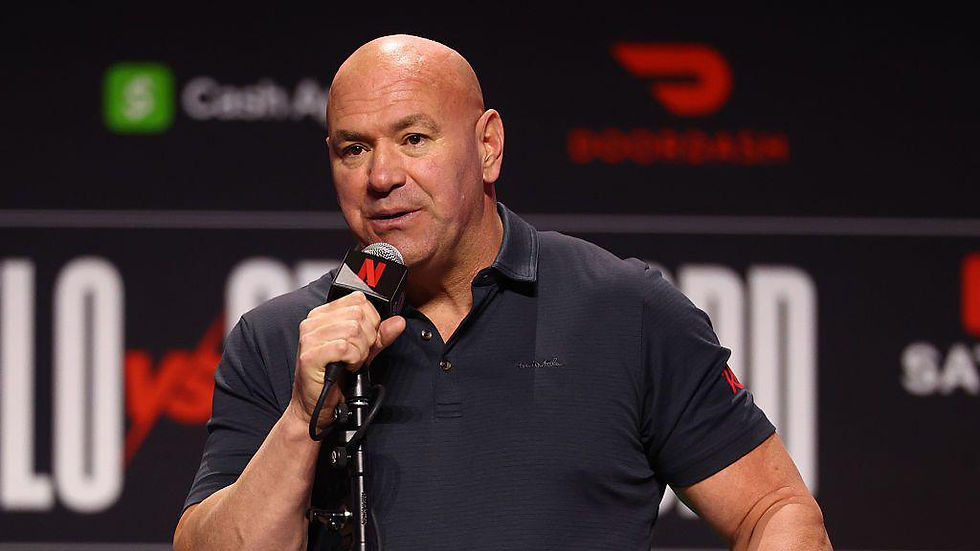
Dana White has said it openly in different ways for years. This is entertainment. And whether people like that or not, he is right from a business standpoint. The UFC is not just selling fights. It is selling personalities, rivalries, clips, press conferences, walkouts, stories, and moments that can travel online.
That changes the incentive system.
Because once attention becomes the currency, martial arts mastery is no longer enough by itself. You can be elite. You can be disciplined. You can be technically brilliant. But if you do not create attention, someone louder, more controversial, or more marketable can pass you in the conversation.
That is the modern fight game.
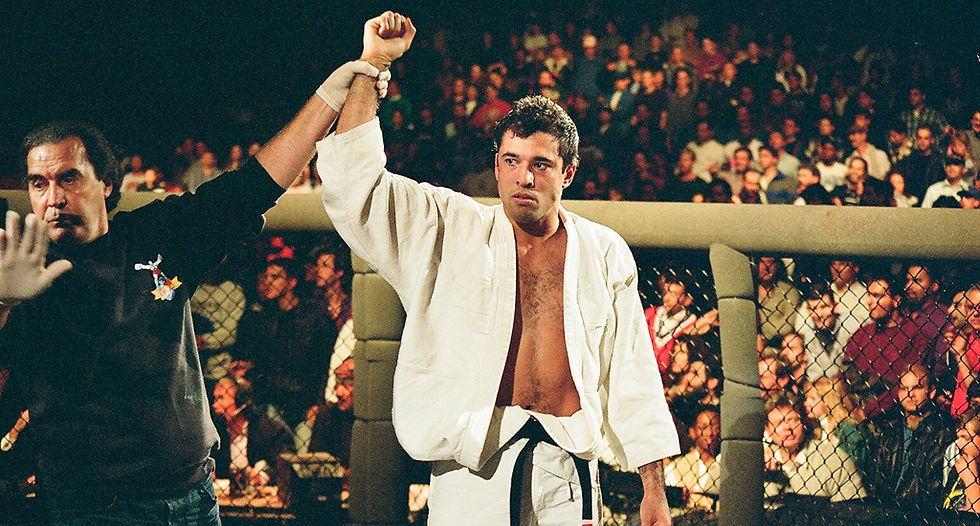
In the early UFC, the appeal was style against style. Royce Gracie did not need to be a comedian. He did not need viral interviews. He was the story because Brazilian jiu-jitsu was the story. The cage was a laboratory, and fans were watching to find out what actually worked.
Now the headline is rarely just technical intrigue. It is personality against personality. Narrative against narrative. Brand against brand. The fight itself still matters, but the promotion starts long before anyone throws a punch.
That is why fighters now train for more than combat. They train for cameras. They think about walkouts. They think about callouts. They think about post-fight interviews. They think about how a clip will look on social media.
And honestly, it makes sense. The system rewards it. A fighter who entertains gets promoted more. A fighter who gets promoted more gets bigger opportunities. A fighter with bigger opportunities gets more money, more visibility, and more leverage.
Then everyone else sees that and learns the lesson. It is not enough to win. You have to make people watch.
That does not mean the sport has become fake. MMA is still one of the most demanding sports in the world. The level of wrestling, striking, grappling, cardio, and tactical awareness required to compete at the highest level is insane. But technical excellence alone does not guarantee stardom anymore.
That is the part purists struggle with.
Because something does get lost when attention becomes more valuable than pedigree, the respect for lineage starts to fade. The quiet fighter who spent his life mastering a discipline can get overshadowed by someone who understands media better. The athlete built in the gym can lose attention to the athlete built for the microphone.
And that is not always fair.
Martial arts used to carry a certain seriousness. There was respect in the silence. Respect in the discipline. Respect in the gym culture, the mentorship, the years spent learning one thing until it became instinct.
Those values still exist. They just do not trend.
A respectful rivalry does not move the internet the same way a personal feud does. A technically perfect grappling exchange does not always travel as far as a chaotic press conference clip. A fighter with deep mastery might be appreciated by hardcore fans, but the broader audience often responds to conflict, personality, and spectacle first.
That is where MMA is now. Part sport. Part martial art. Part entertainment machine. And the fighters who understand all three usually become the ones the promotion pushes hardest.

That brings us to Arman Tsarukyan.
Because if you want a perfect example of the tension between mastery and marketability, Arman is one of the clearest cases in the sport.
Technically, he represents everything old-school martial arts people claim they still want. He is disciplined. He is layered. He is not built on gimmicks. His game is rooted in high-level wrestling, positional control, pressure, and constant technical improvement.
When he fought Islam Makhachev in his UFC debut, people who really understood the sport saw it immediately. That was not just a young fighter losing to an elite opponent. That was a future contender showing he belonged with the best in the world.
The skill was obvious. But the spotlight did not follow him the way it follows louder fighters.
And that is the point.
Arman has not been held back because he lacks ability. He has been harder to market because his value is mostly inside the cage. He does not build his career around theatrics. He does not constantly manufacture viral moments. He does not make every fight feel like a personal drama.
His brand is in competition.
And in today’s MMA, that can almost work against you.
Not because fans do not respect skill, but because skill has to fight for oxygen in an attention economy. A quiet contender has to win over and over again until ignoring him becomes impossible. A loud contender can sometimes create momentum before the results fully justify it.
That is the difference.
Arman is not proof that MMA has no meritocracy. He is proof that merit now has to pass through entertainment value before it becomes mainstream.

Khabib Nurmagomedov is the obvious comparison, but even that comparison shows how much the sport has changed.
Khabib became one of the biggest stars in combat sports without becoming a traditional entertainer. He did not need to dance for the cameras. He did not need to fake a personality. His dominance became the story. His undefeated record became the story. Dagestan became part of the story. His discipline, culture, pressure, and refusal to lose became bigger than promotion itself.
But Khabib also rose at the perfect time.
The sport could still build a myth around dominance. And once that dominance collided with Conor McGregor, the biggest entertainment force MMA had ever seen, Khabib became impossible to ignore.
That is hard to replicate.
Today, the sport is flooded with fighters who understand promotion from day one. They know how to talk. They know how to post. They know how to create controversy. They know how to stay visible even when they are not fighting.
So for someone like Arman, the road is harder. He has to make the sport respect him first. Then he has to make the business notice him. Then he has to make the audience care.
That is the modern equation, and why his case matters.
Arman Tsarukyan represents the fighter MMA claims to respect: technical, serious, skilled, disciplined, and dangerous. But he is competing in an era where being the better martial artist does not always make you the bigger star.
MMA has not abandoned martial arts. It has just placed martial arts inside a much larger entertainment system. The best fighters still have to be elite, but now they also have to be visible. They have to win fights and win attention, and maybe that is evolution.
Maybe spectacle is what made the sport global. Maybe without personalities, rivalries, and viral moments, MMA never reaches the audience it has now.
But there is a cost.
The more the sport rewards fame, the easier it becomes to forget what made it special in the first place. The cage was supposed to answer who was best. Now, sometimes, it answers who is most marketable.
MMA is still real. The mastery is still there. The discipline is still there. The great fighters are still great. But the sport is no longer only asking who has the best technique. It is asking who can turn that technique into a story people are willing to watch.


Comments